My research focuses on the fundamental understanding of structures and processes on the nano and micrometer scale in the research areas of solid liquid interfaces, electrocatalysis and plasma electrolysis. To address these questions I employ surface science methods (under UHV and laboratory conditions) and electrochemical techniques. More recently I also explore the use of databases, automated workflows and artificial intelligence in this research context. The data driven research is explained on the RDM and echemdb subpages.
Plasma Electrolysis
Upon applying a high voltage (tens to several 100 V) between a comparably small working and large counter electrodes, leads to the formation of a vapor layer between the electrode and electrolyte, in which a plasma can be ignited. This has an effect on the structural properties of the electrode and the composition of the electrolyte.Artmann et al. (2021)Artmann et al. (2022)Artmann et al. (2022) To understand these outcomes, we aim at gaining a fundamental understanding of the processes within the vapor layer, in dependence of the electrode material, electrolyte composition and external parameters such as voltage and temperature.Forschner et al. (2023)Forschner et al. (2025)Forschner et al. (2026) The work on plasma electrolysis is funded within the SFB-CRC1316 in project B12.
Plasma properties
Plasma electrolysis usually appears as a bright glow surrounding the plasma electrode and is often denoted as contact glow discharge electrolysis (CGDE). Lukas Forschner used high-speed camera imaging, to reveal that the glow actually consists of small short living lightnings forming between the electrode and electrolyte.Forschner et al. (2025) In collaboration with our partners at RUB, by combining insights form optical emission spectroscopy (OES), the voltage probes to study the electrolyte, and structural characterization of the electrode, we were able to identify that the plasma rather has both properties of a glow and arc.Forschner et al. (2026)
(a)Temporal evolution of the vapor layer
(b)Appearance of individual discharges
Figure 1:Temporal evolution of the vapor layer (left) and appearance of individual discharges (right).Forschner et al. (2026)
Electrolyte properties
Due to the high currents in plasma electrolysis a major power loss is attributed to the ohmic resistance of the electrolyte.Forschner et al. (2023) The good side of it is, that this voltage drop can be measured, which allows studying properties relevant for the plasma generation, i.e., the voltage drop across the vapor layer. These studies also revealed that the applied voltage is not a good descriptor for comparison between experiments, but rather the current density at the driving electrode.
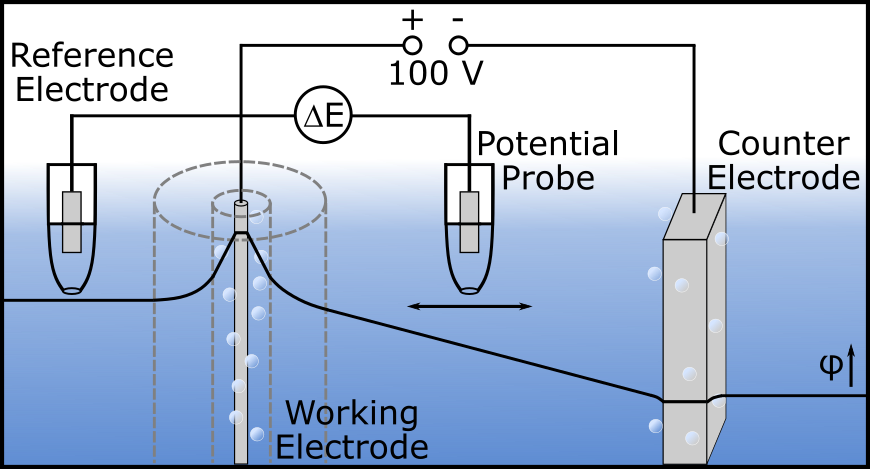
(a)Voltage drop measurement
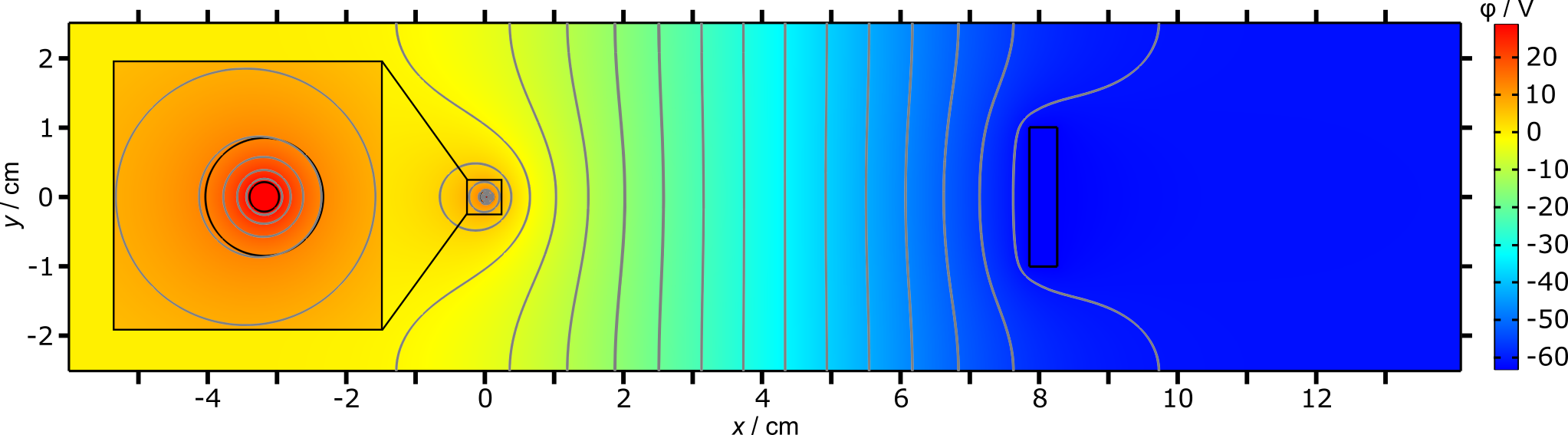
(b)COMSOL simulation of potential distribution
Figure 2:Voltage drop measurement setup (left) and COMSOL simulation of the potential distribution in the electrolyte (right).Forschner et al. (2023)
Electrode Restructuring
Focusing on materials relevant for electrocatalysis, E.Artmann found that the changes in the structural properties of Au, Cu and Pt, depend on the nature of the material, the crystallographic orientation, and the time the electrodes were exposed to the electrolyte after the electrolysis. The latter is due to the chemical interaction of the electrode and formed during the plasma electrolysis.Artmann et al. (2021)Artmann et al. (2022)Artmann et al. (2022)Artmann et al. (2023) Au is a particularly interesting system, as plasma electrolysis allows for the creation of nanoporous Au (NPG - a highly porous black structure) within a few seconds in solutions, which by other means would require significantly more time, preparation steps, and various chemicals.Artmann et al. (2022)Artmann et al. (2023)
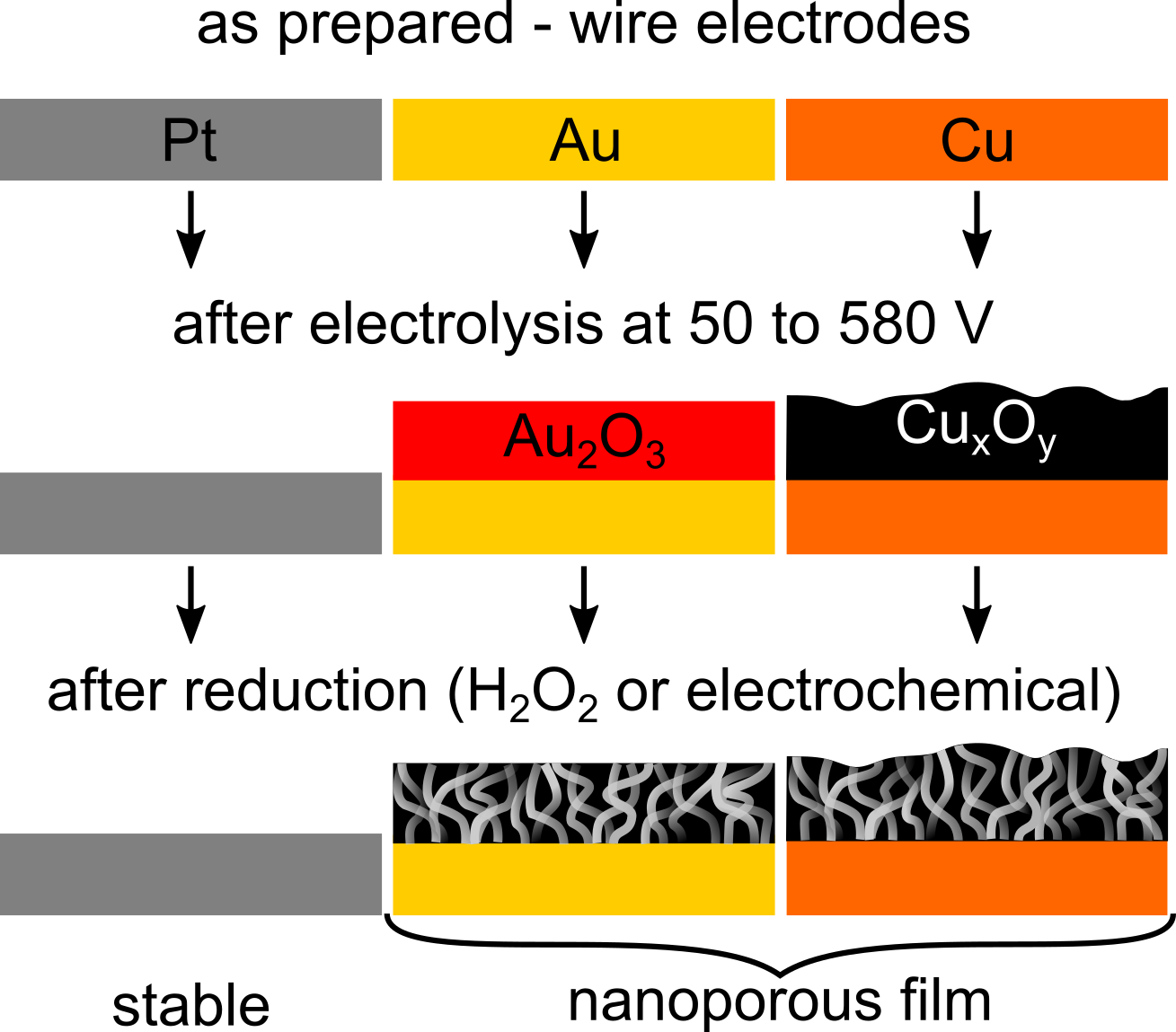
Figure 3:Structural evolution of Au, Cu and Pt anodes upon plasma electrolysis.Artmann et al. (2021)
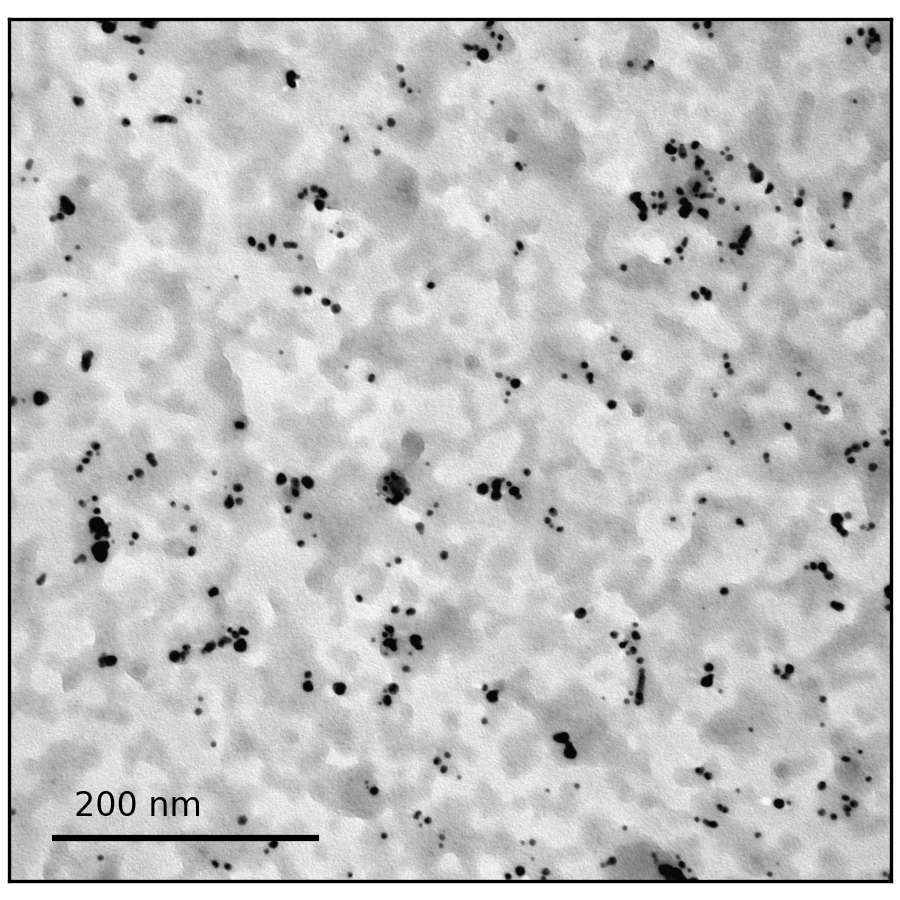
The plasma can evaporate the electrode or sputter material from the electrode, which can be used for nanoparticle formation in the solution, illustrated by L. Forschner for Au-NP formation during cathodic plasma electrolysis.Forschner et al. (2026)
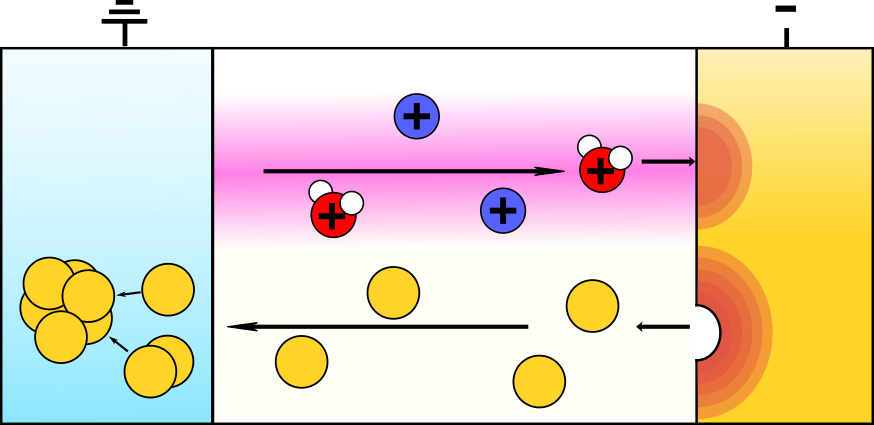
(a)NP formation mechanism
(b)Au nanoparticles
Figure 4:Schematic of the nanoparticle formation mechanism during cathodic plasma electrolysis (left) and resulting Au nanoparticles in solution studied on a TEM grid (right).
OER catalysts
This project aimed at exploring, if Ni electrodes could be modified by plasma electrolysis, to improve its performance in alkaline electrolysers, in collaboration with Sylvain Brimaud at the ZSW. However, we got distracted, and J. Leist found that during the OER the commonly accepted terminated surface rather consists of , based on our combined surface enhanced Raman spectroscopy (SERS) measurements and DFT calculation. Another key finding is that the SERS spectrum of contains overtones, which are little explored and usually not considered. Our results on Co and Mn-based oxides indicate that these overtones might be related to the layered structure of the material.Leist et al. (2026)
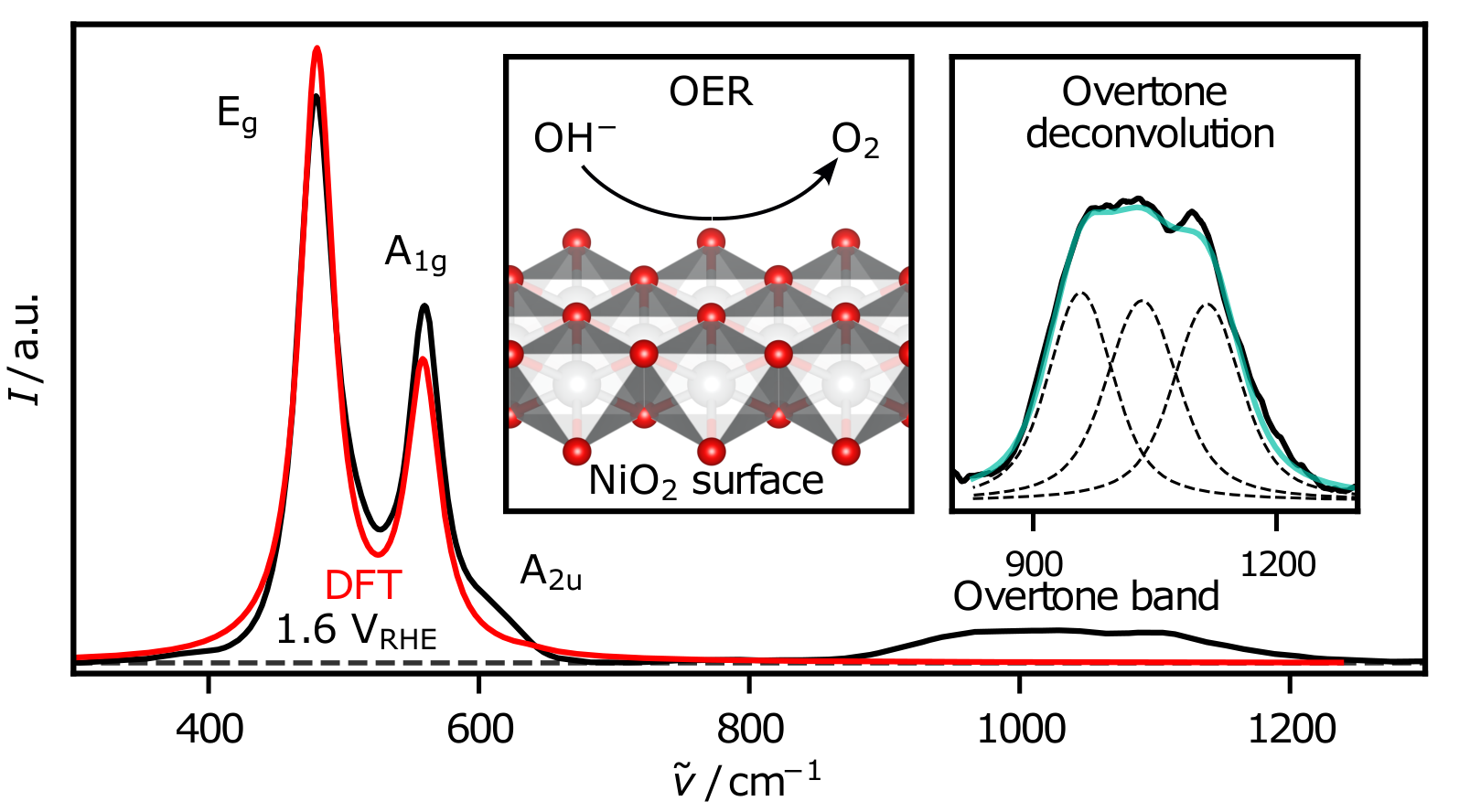
Figure 5:Experimental SE and DFT computed Raman spectrum of , including the overtone region and a 3D ball model.Leist et al. (2026) (kindly provided by Justus Leist)
Single crystal electrodes
I study the structural properties, stability, and (electro)chemical and catalytic activity of bare and admetal-modified metal single crystal electrodes.Schnaidt et al. (2017) Clean and well-defined surfaces serve as model systems to understand fundamental processes at electrode–electrolyte interfaces, such as adsorption, surface reconstruction, and electrocatalytic reactions relevant to energy conversion.Engstfeld et al. (2014)
Ru(0001)
Somehow this is my favorite system 😌. It served me as a template during my PhD to study numerous bi- and trimetallic adlayer structures including NP growth on graphene modified Ru(0001).Engstfeld et al. (2012)Engstfeld et al. (2012)Engstfeld et al. (2016)Mancera et al. (2017)Han et al. (2013)Han et al. (2013)Liu et al. (2015)
It was also the first system that I studied when I started doing electrochemistry, which was rather complicated, since the system was not yet well explored. Some of the unclear features took me (with some breaks) several years to resolve, using a DEMS flow cell attached to a UHV chamberSchnaidt et al. (2017) and had the chance to perform SXRD measurements with Jakub Drnec at the ESRF.Engstfeld et al. (2021)
The main reason is that Ru(0001) interacts very strongly with adsorbates and in some cases (), the surface redox processes show a strong hysteresis.Engstfeld et al. (2021) The consequence of this strong interaction is that hydrogen can be evolved as anodic at more positive potentials than the equilibrium potential for the hydrogen evolution reaction.Engstfeld et al. (2021)Scott et al. (2020) Second, the ORR activity on this electrode strongly depends on the type of adsorbate, which can lead to significant formation of ,Engstfeld et al. (2024) which is not expected from the scaling relations proposed for the ORR for Ru.
Read more on the exciting electrocatalytic properties of admetal-modified Ru(0001) electrodes below.
Cu(hkl)
During my Postdoc at DTU Physics (SurfCat) I started working on Cu, despite that I wanted to have a closer look at Ru oxides 🙃. But everyone was into Cu at the time due to the potential use for the electroreduction of .Nitopi et al. (2019)
What was striking was, that in contrast to the Pt community, almost no one would publish cyclic voltammograms and detailed studies on single crystal electrodes were missing (aside from numerous works using in situ STM). In a combined effort studying Cu(100) under UHV conditions by STM and XPS and different types of electrochemical cells, we could at least elucidate the CV for Cu(100).Engstfeld et al. (2018)
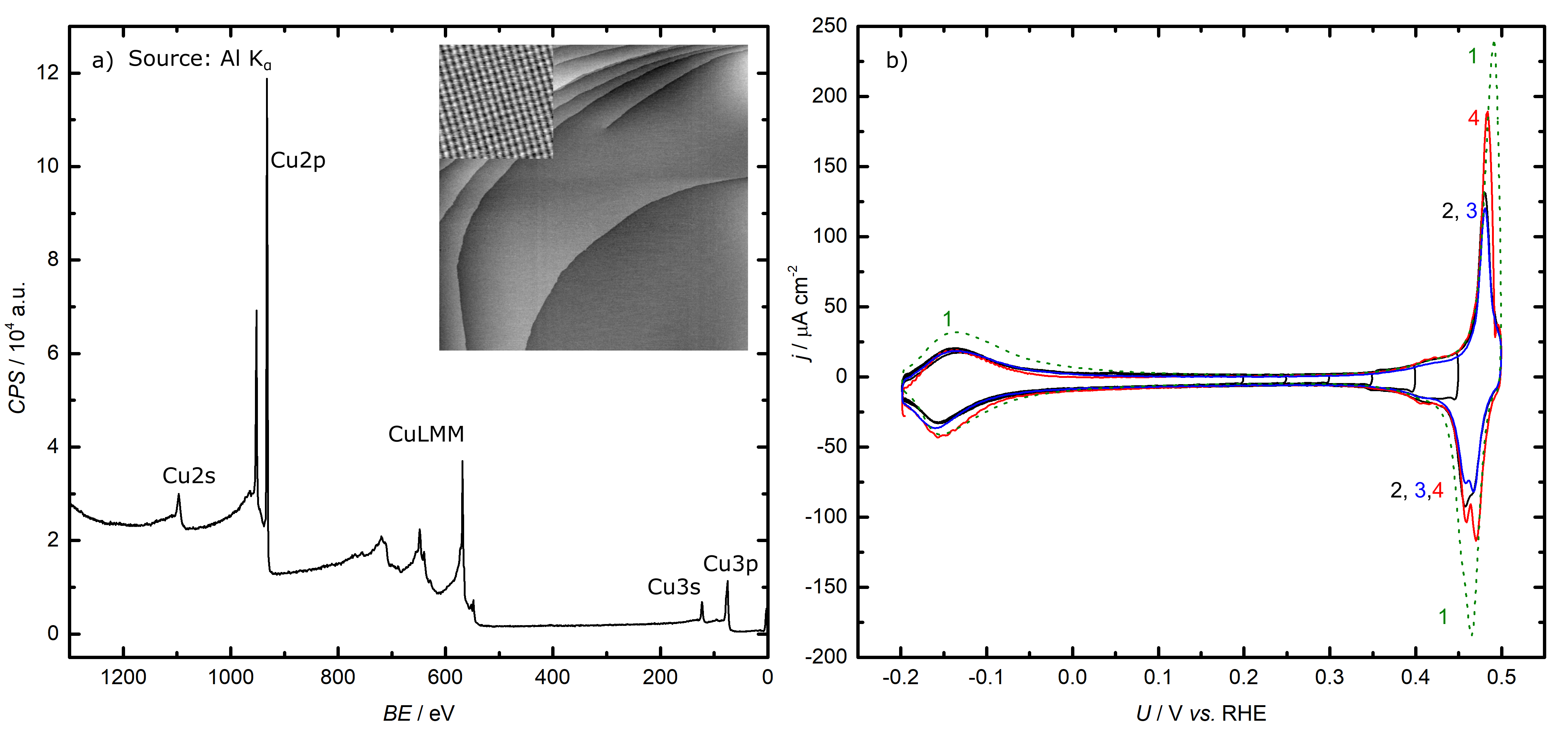
Figure 6:XP spectrum and STM image on the left and corresponding CVs for Cu(100) on the right (Reprinted from Engstfeld et al. (2018), published under a Creative Commons CC BY license (Wiley, 2018))
Interestingly at the time at DTU Soren Scott was able to detect anodic using EC-MS. I immediately thought this was the key to explain some unexplainable observations I made on Ru(0001) during my PhD, which finally during my second Postdoc in Ulm turned out true (see Ru(0001) above) and lead to some nice collaborative work.Scott et al. (2020)
echemdb
Finding CV data on single crystals and comparing such data with own data or among each others, was during my studies with single crystals always a tedious task. To spare future researchers the same pain, some friends, colleagues, and myself devoted ourselves to create a CV database. Read more on echemdb here.
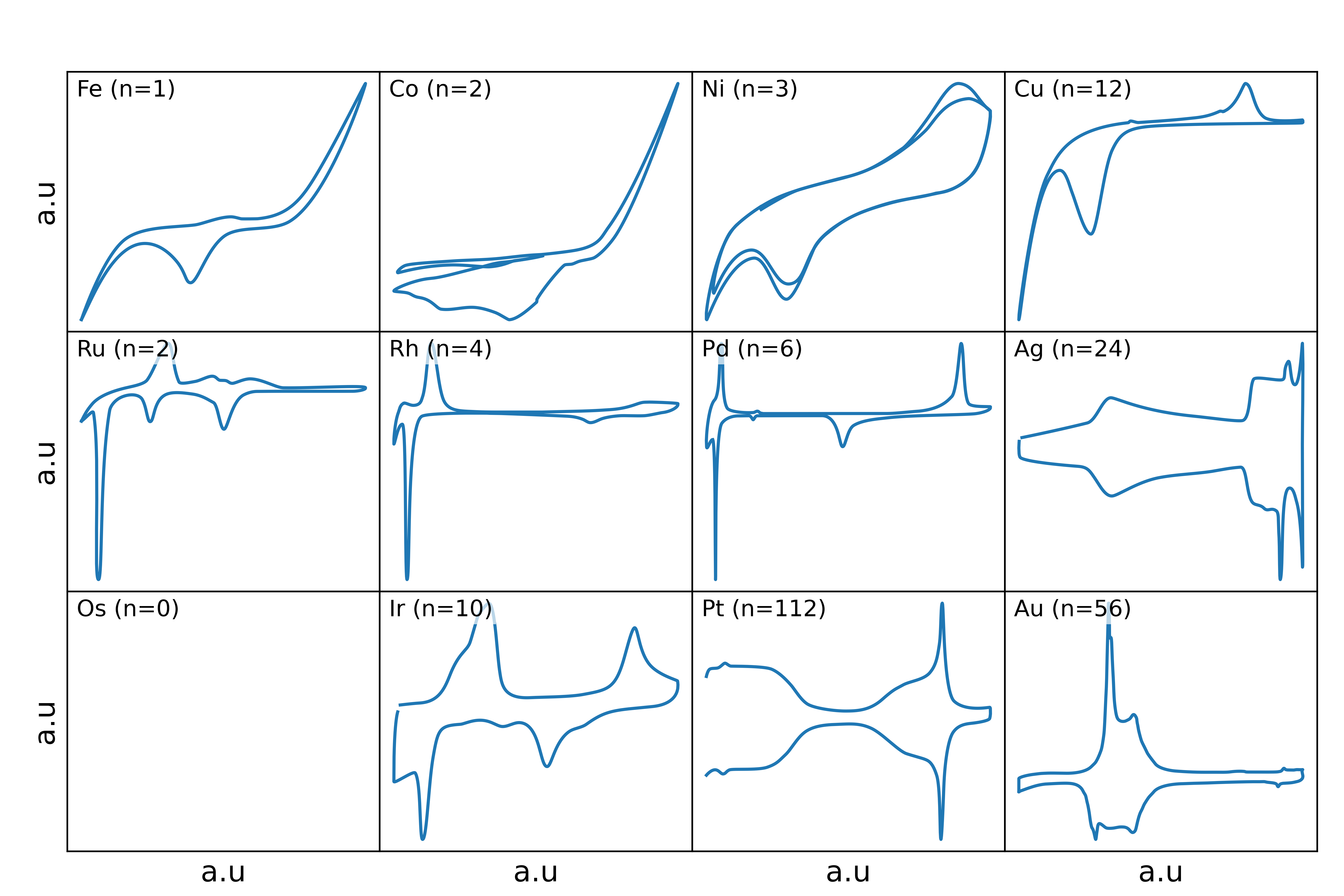
Figure 7:Periodic table of CVs for transition metal single crystal electrodes, created from the echemdb dataset.
Ad metal modified electrodes
Schüttler et al. (2020)Schüttler et al. (2021)Schüttler et al. (2021)Beckord et al. (2016)Mancera et al. (2017)Engstfeld et al. (2016)Artmann et al. (2023)Engstfeld et al. (2012)Engstfeld et al. (2012)Engstfeld et al. (2012)
Stay tuned
More information will follow on various works dealing with, for example, the electrocatalytic activity of bimetallic electrodes Engstfeld et al. (2015)Engstfeld et al. (2014)Klein et al. (2019)Klein et al. (2019)Engstfeld et al. (2025) and ionic liquids.Heubach et al. (2024)Heubach et al. (2024)
- Artmann, E., Menezes, P. V., Forschner, L., Elnagar, M. M., Kibler, L. A., Jacob, T., & Engstfeld, A. K. (2021). Structural Evolution of Pt, Au and Cu Anodes by Electrolysis up to Contact Glow Discharge Electrolysis in Alkaline Electrolytes. ChemPhysChem, 22, 2429. 10.1002/cphc.202100433
- Artmann, E., Forschner, L., Jacob, T., & Engstfeld, A. K. (2022). Using auxiliary electrochemical working electrodes as probe during contact glow discharge electrolysis: A proof of concept study. Journal of Vacuum Science & Technology A, 40, 053005. 10.1116/6.0001911
- Artmann, E., Forschner, L., Schüttler, K. M., Al-Shakran, M. A., Jacob, T., & Engstfeld, A. K. (2022). Nanoporous Au Formation on Au Substrates via High Voltage Electrolysis. ChemPhysChem, 24, e202200645. 10.26434/chemrxiv-2022-mx2qd
- Forschner, L., Artmann, E., Jacob, T., & Engstfeld, A. K. (2023). Electric Potential Distribution Inside the Electrolyte During High Voltage Electrolysis. Journal of Physical Chemistry C, 127, 4387. 10.1021/acs.jpcc.2c07873
- Forschner, L., Gembus, J.-L., Schücke, L., Awakowicz, P., Gibson, A. R., Jacob, T., & Engstfeld, A. K. (2025). Statistical Analysis of the Dynamic Behavior of Individual Discharges During the Ignition and Continuous Phases of Contact Glow Discharge Electrolysis. Journal of Physics D: Applied Physics, 58, 215204. 10.1088/1361-6463/adce16
- Forschner, L., Fogang, L. T., Gembus, J.-L., Bibinov, N., Schücke, L., Awakowicz, P., Gibson, A. R., Jacob, T., & Engstfeld, A. K. (2026). Characterization of Discharge Types during Cathodic Plasma Electrolysis. Journal of Physics D: Applied Physics, 59, 115203. 10.1088/1361-6463/ae3b4e
- Artmann, E., Schmider, T., Jacob, T., & Engstfeld, A. K. (2023). Facet-Dependent Formation and Adhesion of Au Oxide and Nanoporous Au on Poly-Oriented Au Single Crystals. ChemPhysChem, 24, e202300428. 10.26434/chemrxiv-2023-nf7v3
- Leist, J., Neufischer, A., Jacob, T., & Engstfeld, A. K. (2026). Consequences of Overtones in Raman Spectra for Assigning Nickel Anode Surface Structures as NiO2 during Alkaline Electrolysis. Nature Catalysis. 10.1038/s41929-026-01613-9
- Schnaidt, J., Beckord, S., Engstfeld, A. K., Klein, J., Brimaud, S., & Behm, R. J. (2017). A combined UHV-STM-flow cell set-up for electrochemical/electrocatalytic studies of structurally well-defined UHV prepared model electrodes. Physical Chemistry Chemical Physics, 19, 4166–4178. 10.1039/c6cp06051j
- Engstfeld, A. K., Brimaud, S., & Behm, R. J. (2014). Potential induced surface restructuring – The need for structural characterization in electrocatalysis research. Angewandte Chemie International Edition, 57, 12936–12940. 10.1002/anie.201404479
- Engstfeld, A. K., Beckord, S., Lorenz, C. D., & Behm, R. J. (2012). Growth of PtRu Clusters on Ru(0001) Supported Monolayer Graphene Films. ChemPhysChem, 13, 3313–3319. 10.1002/cphc.201200294
- Engstfeld, A. K., Hoster, H. E., Behm, R. J., Roelofs, L. D., Liu, X., Wang, C.-Z., Han, Y., & Evans, J. W. (2012). Directed assembly of Ru nanoclusters on Ru(0001)-supported graphene: STM studies and atomistic modeling. Physical Review B, 86, 085442. 10.1103/PhysRevB.86.085442
- Engstfeld, A. K., Jung, C. K., & Behm, R. J. (2016). Kinetic limitations in surface alloy formation: PtCu/Ru(0001). Surface Science, 643, 65–78. 10.1016/j.susc.2015.08.010
- Mancera, L. A., Engstfeld, A. K., Bensch, A., Behm, R. J., & Groß, A. (2017). Challenges in bimetallic multilayer structure formation: Pt growth on Cu monolayers on Ru(0001). Physical Chemistry Chemical Physics, 19, 24100. 10.1039/c7cp03320f
- Han, Y., Engstfeld, A. K., Behm, R. J., & Evans, J. W. (2013). Atomistic modeling of the directed-assembly of bimetallic Pt–Ru nanoclusters on Ru(0001)-supported monolayer graphene. Journal of Chemical Physics, 138, 134703. 10.1063/1.4798348